
15 Jun How to Identify and Address Concrete Spalling in Coastal Buildings
Concrete doesn’t fail overnight. In most cases, visible damage starts small and builds over time. One of the most common signs of structural deterioration in Florida buildings is concrete spalling. What begins as minor cracking or surface flaking can quickly turn into exposed rebar, weakened structural components, and costly repairs if not addressed early.
For property managers and boards overseeing coastal or high-rise buildings, understanding how spalling develops and how to respond is critical. In environments where salt, moisture, and heat are constant, concrete systems are under continuous stress. Identifying issues early and aligning repairs with engineering guidance helps prevent larger structural risks and keeps buildings on track for compliance.
What Concrete Spalling Is and Why It Happens
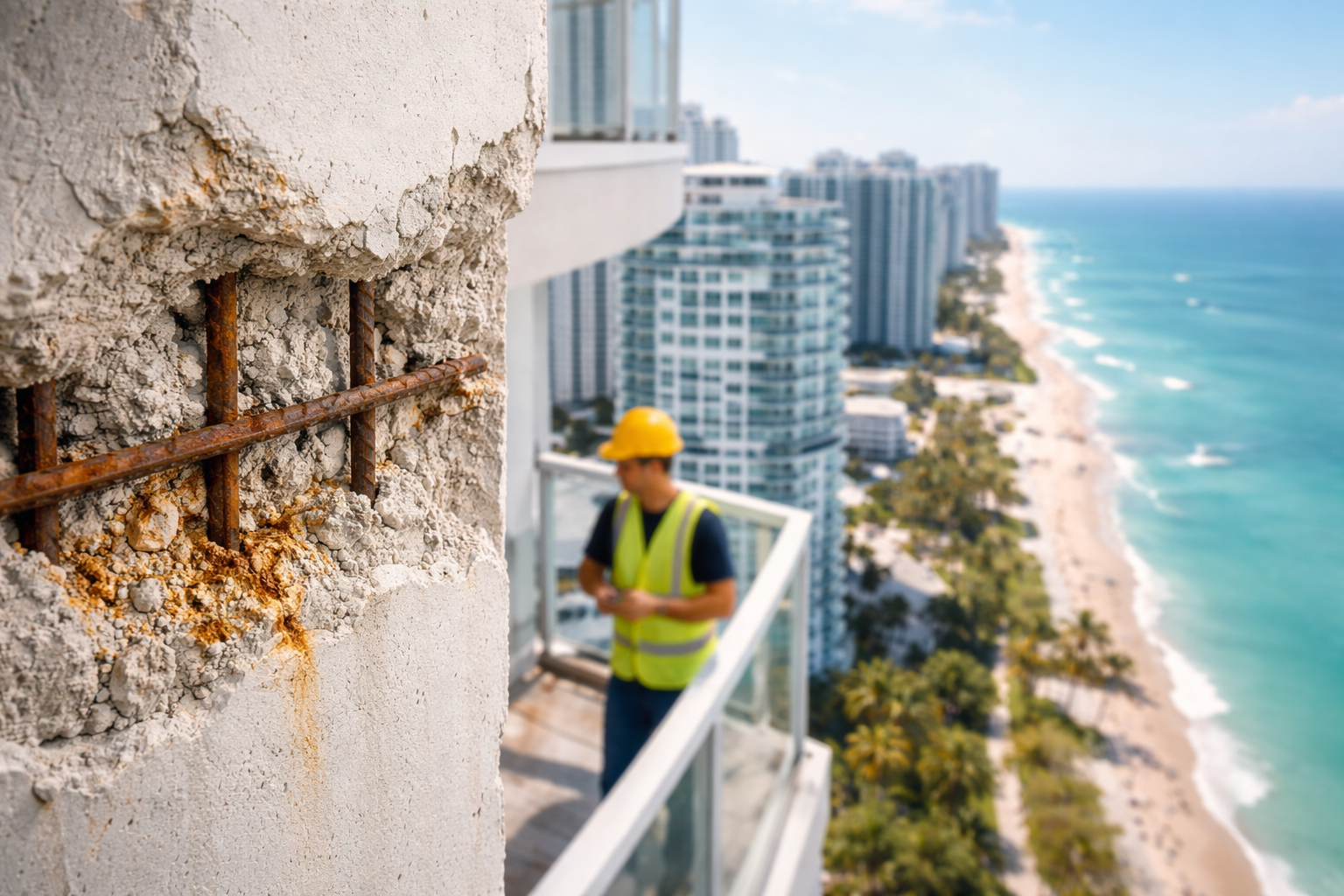
Concrete spalling occurs when the surface layer of concrete breaks, flakes, or chips away. While it may appear cosmetic at first, it is often a sign of deeper structural issues beneath the surface. The most common cause is corrosion of the steel reinforcement inside the concrete. When moisture and oxygen reach embedded rebar, corrosion begins. As steel corrodes, it expands, creating internal pressure that pushes outward against the concrete until it cracks and breaks apart. In Florida’s coastal environment, this process accelerates due to:
- Salt exposure from ocean air, which penetrates concrete over time
- High humidity levels that keep moisture present within the structure
- Repeated wet-dry cycles that drive expansion and contraction
- UV exposure that weakens protective coatings and sealants
What may start as a hairline crack can quickly progress into exposed steel and compromised structural elements if left untreated.
Early Signs to Watch For
Spalling doesn’t appear all at once. There are early indicators that signal when a building’s concrete system is beginning to fail. Here are common warning signs:
- Small cracks forming along balconies, beams, or columns
- Rust staining on concrete surfaces
- Bulging or uneven concrete areas
- Flaking or chipping at edges and corners
- Hollow-sounding areas when tapped
These signs often show up first in areas exposed to weather, such as balconies, parking decks, façades, and roof-level structures. Catching them early allows for targeted repairs instead of full system restoration.
Why Spalling Is More Than a Surface Issue
It’s easy to assume that concrete damage is only cosmetic. In reality, spalling is directly tied to structural performance.
Once rebar is exposed:
- Load-bearing capacity can be reduced
- Water intrusion increases, accelerating deterioration
- Adjacent areas become vulnerable to similar damage
- Safety risks increase, especially in occupied buildings
In high-rise or multifamily properties, falling concrete is also a major concern. Even small fragments can create liability risks for residents and pedestrians below. That’s why spalling is often flagged during inspections tied to recertification, SIRS, or structural assessments. Addressing it properly is not optional. It’s part of maintaining a safe building envelope and structural system.
Repairing Spalling the Right Way
Effective repair starts with identifying the root cause, not just patching the surface. A proper repair process typically includes:
- Removing all compromised concrete to expose affected rebar
- Cleaning and treating steel to stop active corrosion
- Rebuilding the section using compatible repair materials
- Applying protective coatings or waterproofing systems
- Documenting the repair for compliance and future inspections
Each step must align with an engineer-defined scope. Skipping steps or using incompatible materials can lead to repeat failure, sometimes within months. In coastal environments, material selection is especially important. Repair systems must be designed to handle salt exposure, moisture, and temperature fluctuations without breaking down prematurely.
Planning Repairs in Occupied Buildings
Most spalling repairs happen in buildings that remain occupied during construction. That adds complexity to both planning and execution. Key considerations include:
- Coordinating access to balconies, units, or parking areas
- Managing safety zones below active work areas
- Sequencing repairs to minimize disruption
- Maintaining clear communication with residents and boards
This is where structured planning and documentation become essential. Daily logs, photo records, and progress tracking help keep all parties aligned and reduce delays during inspections or closeout.
How Spalling Connects to Long-Term Compliance
Concrete spalling doesn’t exist in isolation. It often ties directly into broader compliance requirements across Florida buildings. Engineers reviewing milestone inspections, recertifications, or SIRS studies look closely at:
- Structural integrity of concrete systems
- Signs of corrosion or material failure
- Quality and documentation of past repairs
Well-documented repairs support smoother inspections and reduce follow-up requests. Poorly documented or incomplete work can lead to delays, additional costs, or repeated evaluations.
That’s why repairs should always be approached with long-term compliance in mind, not just short-term fixes.
Staying Ahead of Structural Deterioration
Spalling is one of the clearest indicators that a building’s structural system needs attention. Addressing it early protects more than just the surface. It preserves the integrity of the entire structure. Buildings that stay ahead of concrete deterioration:
- Avoid emergency repairs and unexpected costs
- Maintain safer conditions for residents and occupants
- Move through inspections with fewer delays
- Extend the lifespan of critical structural components
Waiting until damage becomes severe limits options and increases disruption. Early detection, proper repair, and consistent documentation create a more controlled, predictable path forward. At Fortify, we focus on concrete restoration and structural repair in high-risk and coastal environments. Our approach is built on identifying root causes, aligning with engineer-defined scopes, and delivering repairs that hold up under Florida’s conditions. If your building is showing early signs of spalling or structural wear, we’re ready to help you assess the next steps and plan a clear, compliant repair path.